V6 · Product-design decision
Adapting the visual design to Delphi
My early web-inspired treatment did not fit the application. I revised the visual rules and worked with developers and QA to make the approach practical within Delphi.
Project context: Desktop configuration and quoting software for windows and doors. More than thirty years of established workflows, with extensive customer-specific customisation.
My contribution: I revised the visual approach around contrast rules and Delphi's constraints, working closely with developers, QA and feedback.
Sales initiated the modernisation because V6's dated presentation made the software harder to demonstrate. Conversations with customers and the support team revealed a wider constraint: highly customised implementations had accumulated different workflows and ways of presenting information.
My first attempt was too bright and took a web-inspired approach. I underestimated how rigid the Delphi interface was. Business logic was closely bound to UI controls, so changes that seemed straightforward in a web design could require rebuilding a substantial part of the product.
Revising the approach
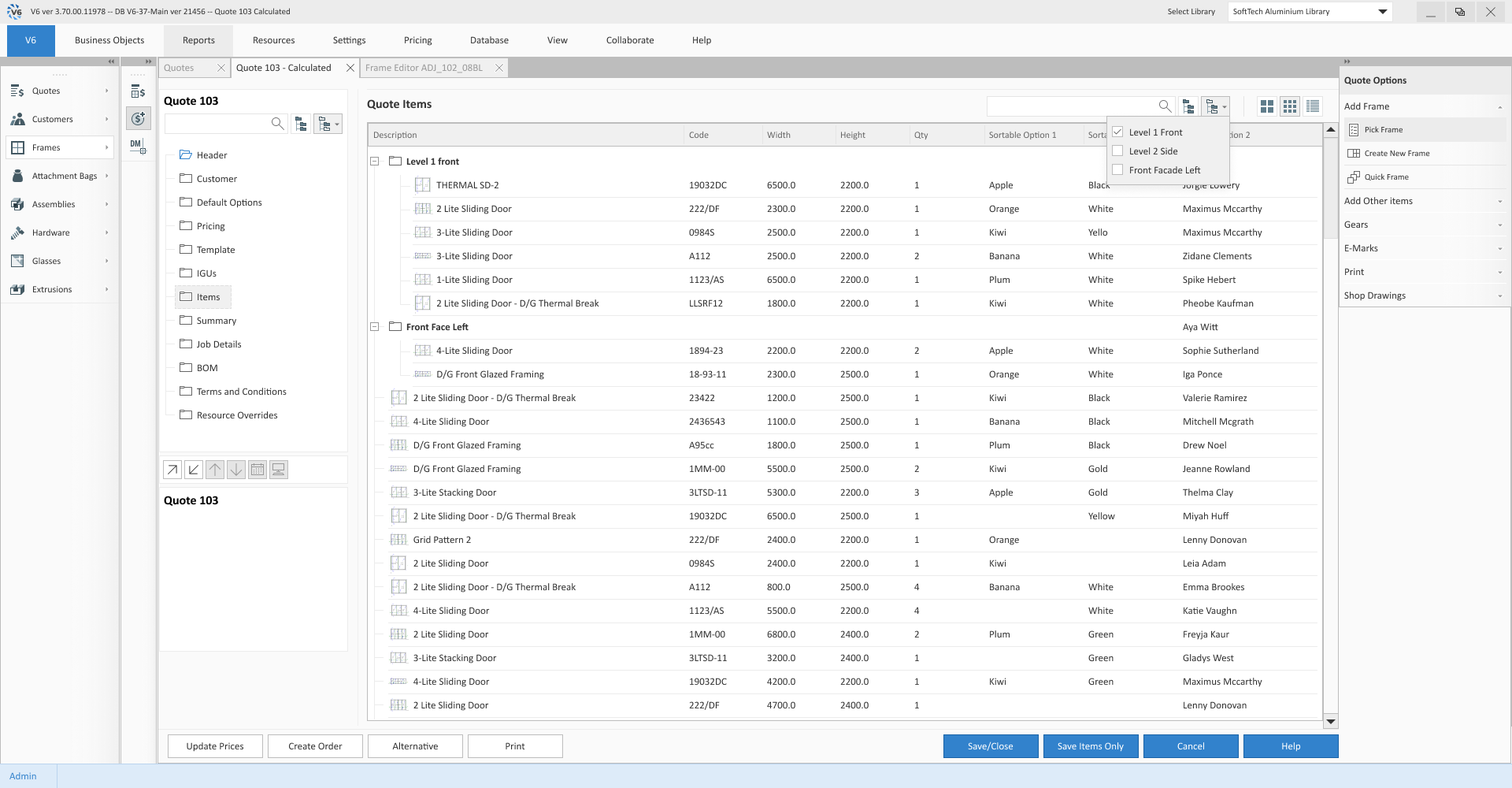
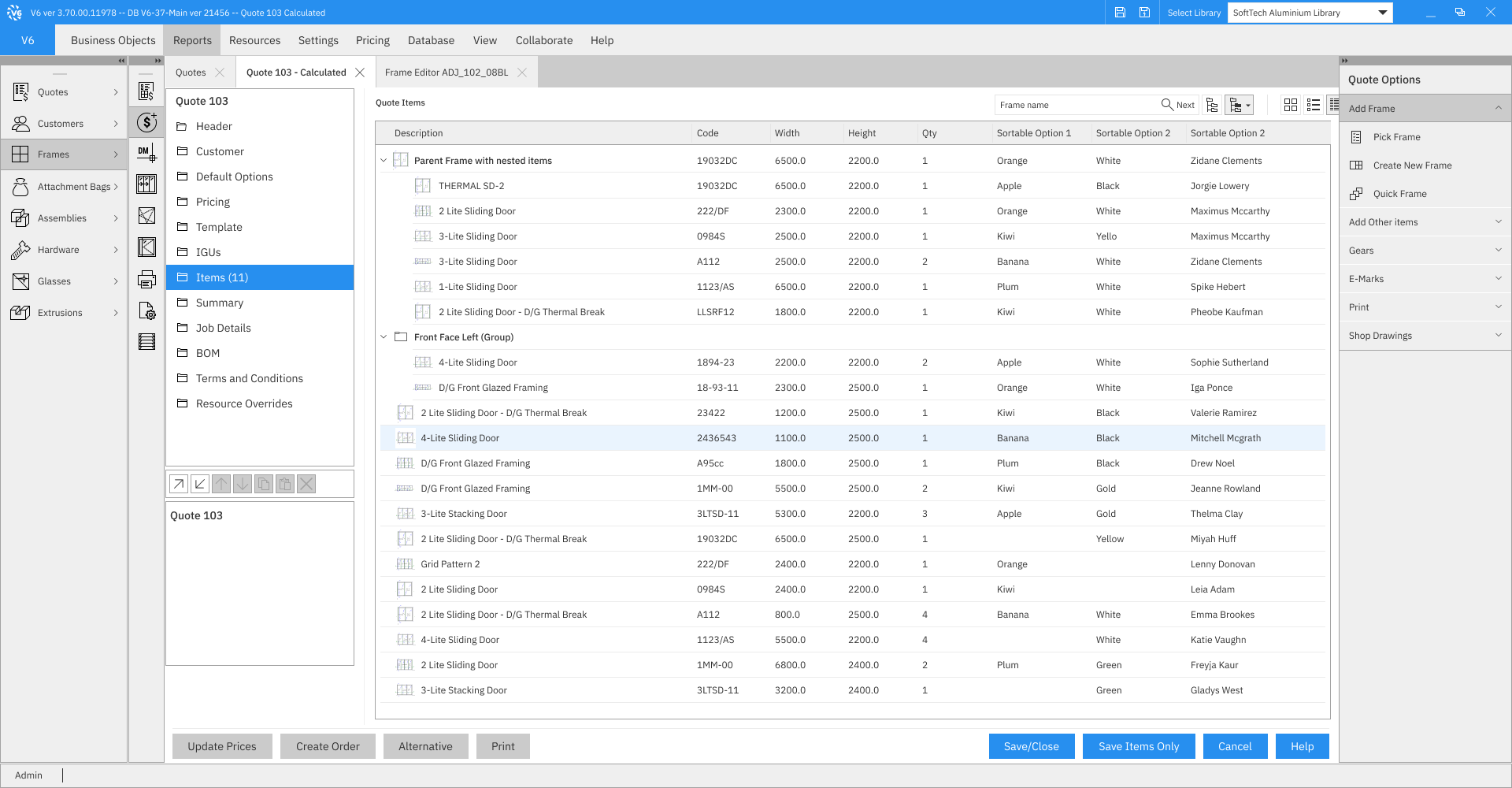
I introduced stricter contrast and accessibility rules and revised the visual treatment around the existing application. Figma mockups communicated the theme and the custom adjustments it needed. I worked closely with developers and QA, used internal demos and feedback, and gathered feedback from a few customer pilots.
- Alternative considered
Apply the initial bright, web-inspired visual approach. It did not fit the rigid Delphi interface or the established application.
- Deliberate choice
- Revise the visual rules and adapt the UI to Delphi and familiar workflows.
- Accepted trade-off
- Limit interaction changes instead of requiring a major rebuild to realise a web-style approach.
 Inspect image and full context
 Inspect image and full context
The designs show changes to navigation emphasis, title colour and workspace separation. Their content and selection states differ, so they are not a controlled test of colour or a matched production before/after.
A practical design result
I revised the visual approach around Delphi's constraints and established workflows, using contrast rules, developer/QA collaboration and feedback to refine the designs.
Design intent is not a conformance result. Images show different content states; measured error reduction or a particular shipped revision is not established.
More space for configuration fields and the frame blueprint also mattered: users needed to inspect what they were configuring. Better visibility was a useful design improvement, with fewer errors and less rework as intended benefits. The supplied evidence does not measure those benefits or establish a percentage increase in workspace.
The account demonstrates a change in approach and visible design iterations. Contrast rules describe the design intent; they do not establish product-wide accessibility conformance. The final general-production scope of these design references is not asserted.