Dealer · Product-design decision
A printable table, with detail in context
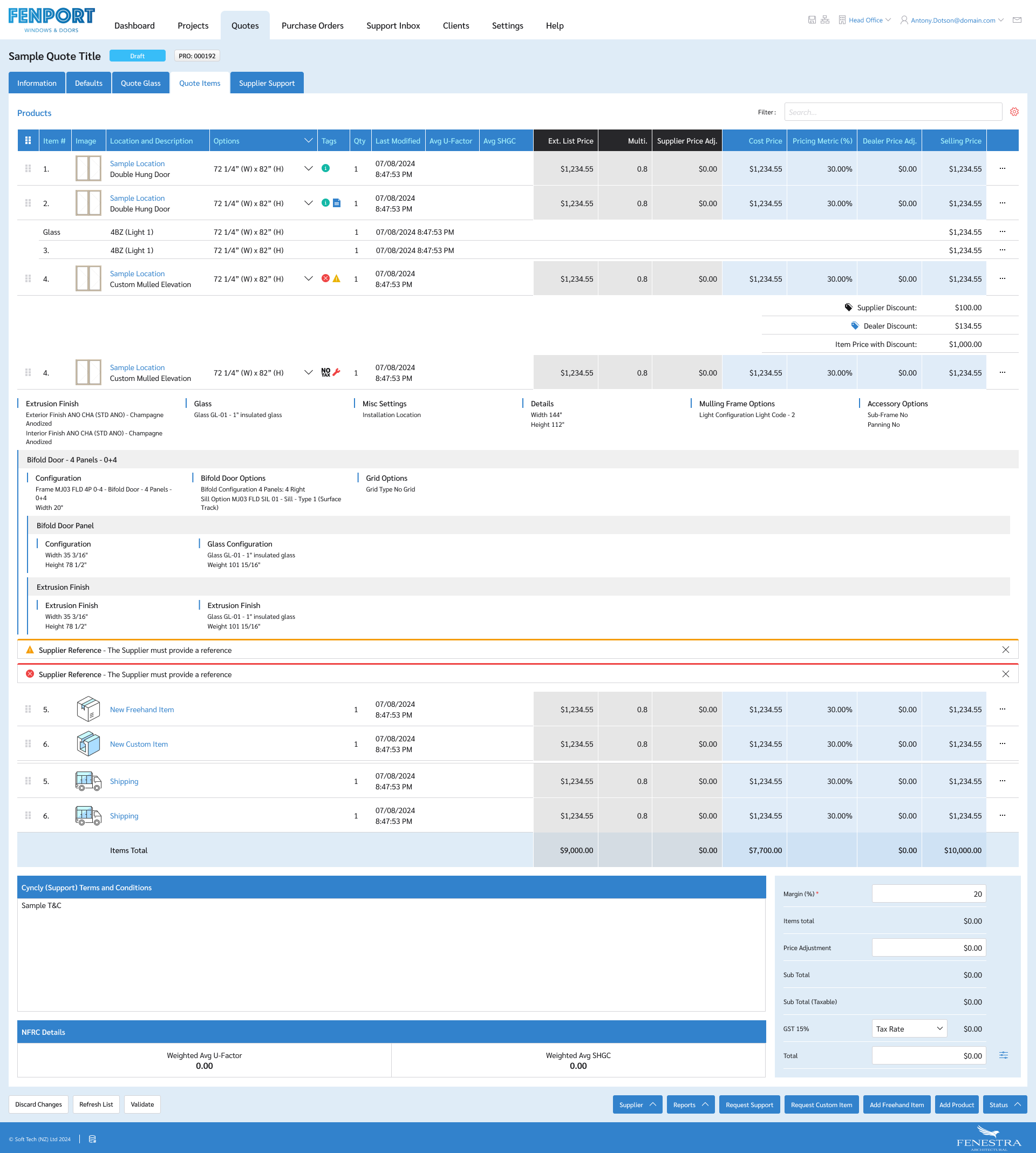
A contextual drawer became overloaded. Expandable rows preserved the table and made item options available outside editing.
Project context: Web quoting and configuration for window and door dealers. The wider product covered 200+ screens across dealer, supplier, support and licensing interfaces, alongside reports and emails.
My contribution: I worked on exposing item detail within the quote while retaining the table-based representation.
Clients needed to inspect an item's options without opening its editing mode. The quote table also supported printed quotes and purchase orders, so replacing it was not a free design choice.
The alternative and the decision
We explored a contextual drawer. It quickly became overloaded with long lists of options. I worked on exposing the detail beneath the relevant table item instead, keeping its relationship to the rest of the quote clear.
- Alternative considered
A contextual drawer for line-item detail. It became overloaded with long lists of item options.
- Deliberate choice
- Expand the table row, retaining the table needed for printed quotes and purchase orders.
- Accepted trade-off
- Duplicate some editing detail and use more vertical space to keep options beside their quote item.
What the decision made possible
The chosen design makes configuration detail available outside editing while retaining the table-based representation.
This does not establish a measured speed improvement or a particular production release.
Expansion deliberately repeats some information from editing mode. That was the compromise we accepted to meet the client request and printing requirements. Variations in the table were mainly about which data belonged in customer-facing or internal views.
 Inspect image and full context
Boundaries and evidence
V6 remained the backend. Engineering implementation is distinct from my product-design responsibility. The export illustrates the information hierarchy; it does not establish a measured speed improvement or a particular shipped revision. It includes example states, rather than documenting one observed customer quote.