Jobio · Product-design decision
Representing the hiring process one round at a time
Growing a single interview date into a multi-round workflow, then correcting a fragmented first layout.
Project context: An AI-powered application workspace for understanding roles, preparing documents and tracking a job search. The work spans the application, marketing website, payment model and practical service delivery.
My contribution: Stage a single-date MVP before the fuller interview model. Design round-level details and preserve explicit control of the application outcome. Consolidate the first disconnected layout into a single Interview tab after recorded feedback.
Early Jobio could hold a single interview date. That was a useful initial scope boundary, but a real hiring process may include a screening call, several interviews and a final decision, each with its own details.
Deliberately staging the model
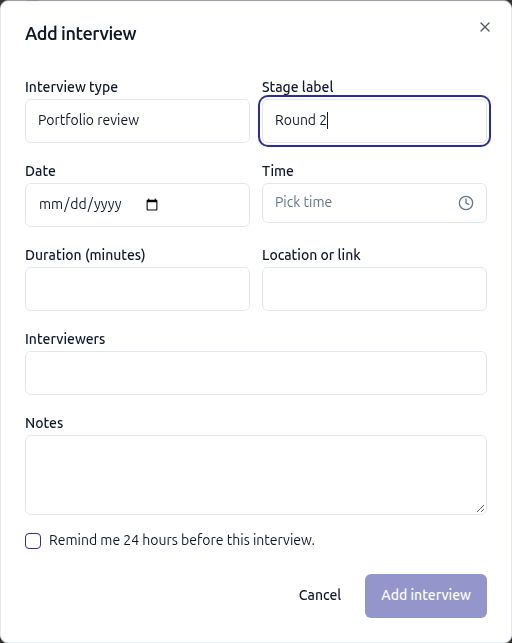
The status-refactor planning kept a single-date interview MVP instead of making the whole release depend on multi-round support. Later work introduced rounds with a type, stage, schedule, location or link, participants, notes and outcome.
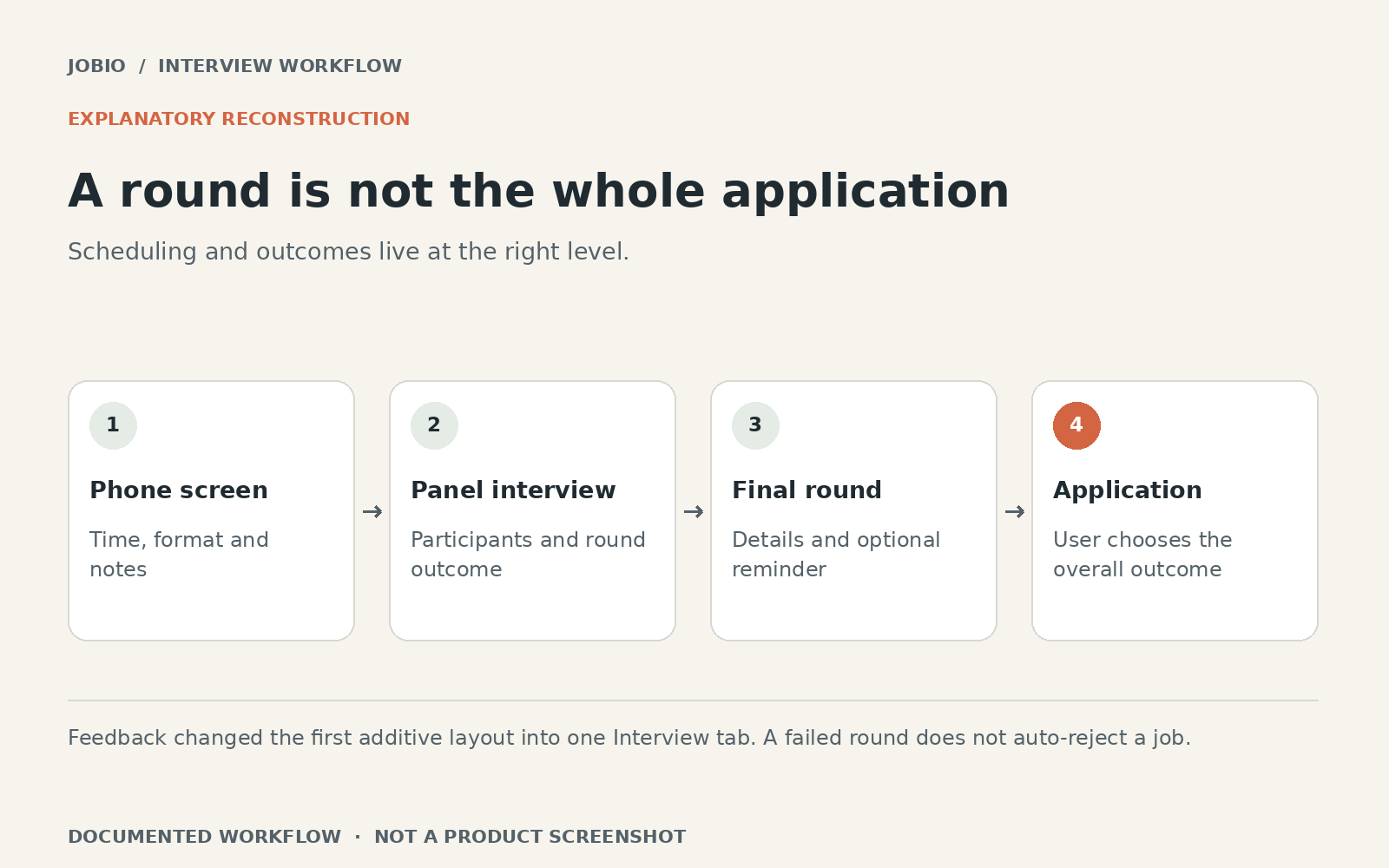
This separated two kinds of progress. A round could be pending, passed, failed or cancelled, while the application retained its own status. Even a failed final round offered a suggestion rather than silently changing the application to rejected. The user kept control of that overall decision.
Revising the first delivered layout
The first implementation added the rounds list beside the older next-interview block. The release record describes testing feedback that this produced two disconnected interview experiences and undermined the purpose of the change.
- Alternative considered
Keep the old next-interview card beside the new rounds list. Recorded testing found that the two disconnected blocks undermined the purpose of introducing a unified process.
- Deliberate choice
- Give each round its own details and outcome, then consolidate the job-level experience into one Interview tab.
- Accepted trade-off
- The interface could be unified before every legacy backend field was removed; test debt and a status-prompt follow-up remained documented.
 Inspect image and full context
I revised the job-level presentation into one Interview tab backed by the round records. The follow-up also refined terminal-outcome behaviour and calendar-link visibility. This was a meaningful correction to the structure, rather than evidence that the initial version had already solved the problem.
 Inspect image and full context
Continuing beyond the tab
Upcoming rounds also needed to appear on the Dashboard, with links into the relevant application. Calendar links supplied a lightweight way to carry a specific meeting into the user's calendar. Later optional reminders extended that continuity without making email a condition of using interviews.
The job-level interface consolidated interview rounds into one tab, with round details, outcomes, calendar links and Dashboard continuity while retaining explicit user control over application status.
The record describes a feedback-led UI correction, not a fully completed backend clean-up. Legacy fields, test debt and a status-prompt follow-up were recorded after the release.
I shaped the scope, model and interaction with AI-assisted delivery. The documentary record still noted legacy backend fields, missing automated coverage for parts of the new flow and a status-prompt follow-up. Those are useful limits to the account: the design correction is evidenced, while flawless delivery or complete migration is not.